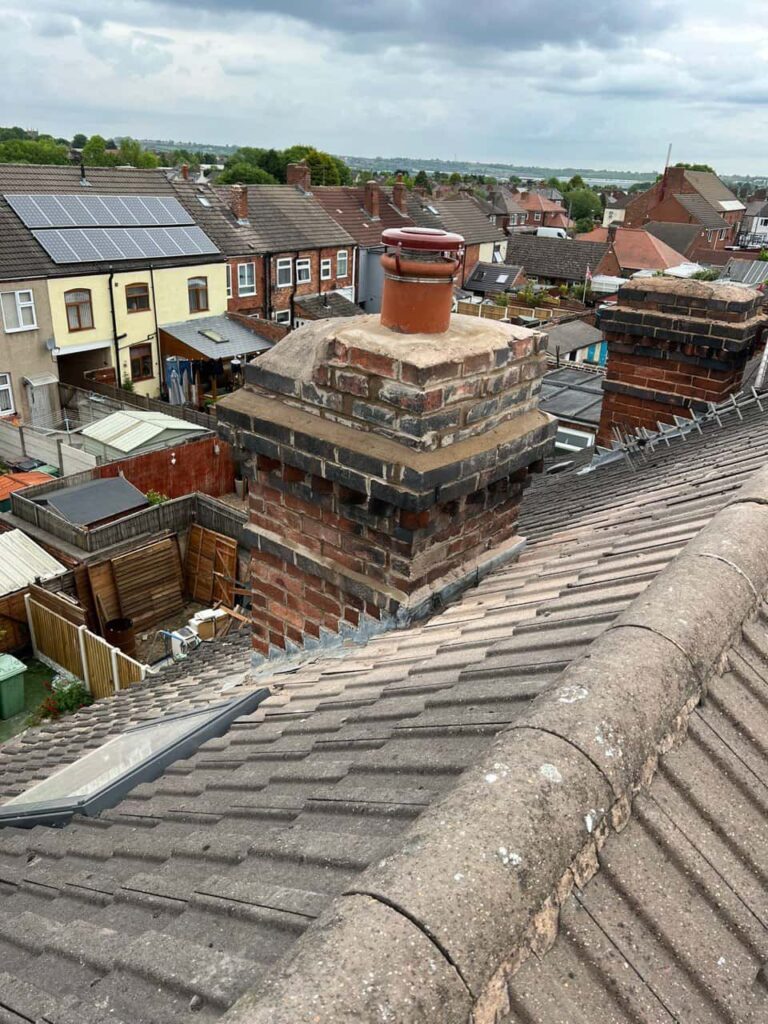
Tiled roofs are designed to provide dependable protection for many years, and isolated defects can often be resolved through professional repairs. A broken tile, small flashing fault or localised mortar failure does not automatically mean that the entire roof needs replacing.
However, repairs become less practical when deterioration affects several parts of the roofing system. If new faults continue to develop or the materials beneath the tiles have failed extensively, replacement may offer a more reliable solution than further patching.
Deciding Between Tiled Roof Repairs and Replacement
The decision should be based on the condition of the complete roof rather than its age or appearance alone. Tiles, fixings, battens, underlay, flashing and structural timbers all work together, so each component must be considered during a professional assessment.
Damage Is Widespread Across Several Roof Slopes
Local repairs are most effective when the defect is confined to a clearly defined area. If cracked, loose or missing tiles are distributed across several slopes, the wider roof may be deteriorating.
Replacing individual tiles can address the immediate openings, but surrounding materials may continue to fail. Widespread defects often suggest that the roof covering and its supporting components should be assessed as a complete system.
Tiles Continue to Slip or Break
One slipped tile may have a damaged nib or failed fixing. Repeated movement in different areas can indicate broader issues involving ageing fixings, weakened battens or general deterioration.
Warning signs include:
- Tiles moving after relatively moderate winds
- Replacements failing to remain secure
- Cracks appearing across multiple sections
- Tile fragments collecting in gutters
- Uneven lines developing along the roof
- Gaps becoming visible between adjoining tiles
When failures are no longer isolated, further tile replacement may not provide dependable long-term performance.
The Underlay Has Deteriorated
Underlay provides secondary protection beneath the tiles, helping direct incidental moisture towards the eaves. Older underlay can become brittle, torn or damaged around fixings.
Small local defects may sometimes be repaired by carefully removing the surrounding tiles. However, widespread deterioration is difficult to address without exposing a much larger area.
If the underlay can no longer perform reliably across the roof, replacing the covering provides an opportunity to renew it properly.
Roof Battens Are Weak or Damaged
Tiles are supported by battens, which also hold many of their mechanical fixings. Prolonged moisture exposure can weaken these timber components and reduce their ability to retain nails or clips.
Replacing visible tiles without addressing defective battens may allow movement to return. Where batten deterioration is extensive, the roof covering normally needs to be removed so the supporting layer can be replaced.
This is why a tiled roof can appear reasonably complete from outside while containing significant concealed defects.
Leaks Keep Appearing in Different Places
A recurring leak in one location may result from an incorrectly diagnosed or incomplete repair. Leaks developing across unrelated areas suggest that the roof has several points of failure.
Water may enter through cracked tiles, deteriorated flashing, failed valleys or defective ridge details. It can then travel beneath the covering before becoming visible indoors.
If repeated investigations uncover new weaknesses throughout the roof, replacement may provide a more coherent solution than addressing each symptom separately.
Previous Repairs Have Created an Uneven System
Over time, a tiled roof may accumulate replacement tiles, patched underlay, renewed mortar and various flashing repairs. Each intervention may have been appropriate when completed, but numerous repairs of different ages can leave the roof increasingly inconsistent.
Mismatched materials or poorly integrated repairs may also create weak junctions. When large parts of the roof have already been altered, another local repair may offer limited value.
A professional roofer should assess whether the remaining original materials are still capable of supporting further work.
The Roofline Is Sagging or Distorted
A visible dip, uneven ridge or distorted roof slope requires careful investigation. These changes may indicate movement or deterioration within the supporting structure rather than a simple problem with the tiles.
Replacing surface materials will not correct a structural weakness. The underlying cause must be identified before any roofing solution is chosen.
Where substantial corrective work is required beneath the covering, replacing the roof may be the most practical way to restore the system correctly.
Ridge, Verge and Valley Defects Are Extensive
Ridges, verges and valleys are particularly important because they protect exposed edges and junctions. Mortar failure, loose ridge tiles and deteriorated valley materials can create several routes for water entry.
An individual detail can often be repaired successfully. Replacement becomes more appropriate when these defects occur alongside ageing tiles, failing underlay or widespread fixing problems.
Treating each detail separately may otherwise leave the rest of the roof approaching the same condition.
The Roof Cannot Be Worked On Without Further Damage
Some old roof tiles become fragile and may crack when lifted or disturbed. This can make local repair increasingly difficult because accessing one defect damages nearby materials.
A successful repair depends on the surrounding roof being strong enough to support the work and integrate with the replacement components. If tiles are failing simply through normal handling, larger-scale replacement may be more dependable.
Internal Moisture Has Become Persistent
Damp timbers, wet insulation or repeated ceiling marks can indicate that moisture has been entering for some time. The visible internal symptoms should be traced back to their external cause.
Several roof defects may be contributing simultaneously, particularly where the covering and underlay are both deteriorating. In these circumstances, a complete assessment is essential before further isolated repairs are attempted.
When Repairs Are Still Appropriate
Replacement is not always necessary simply because a tiled roof is old. Repairs may remain suitable when:
- Damage is confined to one small area
- Most tiles are secure and serviceable
- The underlay and battens remain sound
- The roofline is stable
- Water entry has one identifiable cause
- Surrounding materials can support the repair
- Previous repairs have performed reliably
The objective should be to choose the least extensive solution that restores dependable performance.
What a Roof Assessment Should Establish
A professional assessment should determine:
- How widely defects are distributed
- Whether the tiles remain suitable for continued use
- The condition of fixings, battens and underlay
- Whether moisture has reached the roof structure
- The stability of ridges, verges and valleys
- Whether previous repairs are contributing to current faults
- If local work can integrate securely with surrounding materials
- Whether replacement would resolve several connected problems
This provides a clearer basis for deciding between further repair and complete renewal.
Conclusion
A tiled roof is generally better suited to replacement when deterioration is widespread, leaks keep developing in different places or the underlay and battens have failed extensively. Sagging, fragile tiles and numerous ageing repairs can also indicate that further patching will not restore consistent performance.
Bloxwich Roofing Repairs can assess deteriorating tiled roofs in Bloxwich, West Midlands, identify the condition of the complete roofing system and recommend an appropriate course of action. If your roof requires increasingly frequent attention, contact the team to arrange a professional assessment.
Call us on: 01922 661 599
Click here to find out more about Bloxwich Roofing Repairs
Click here to complete our contact form and see how we can help with your roofing needs.